
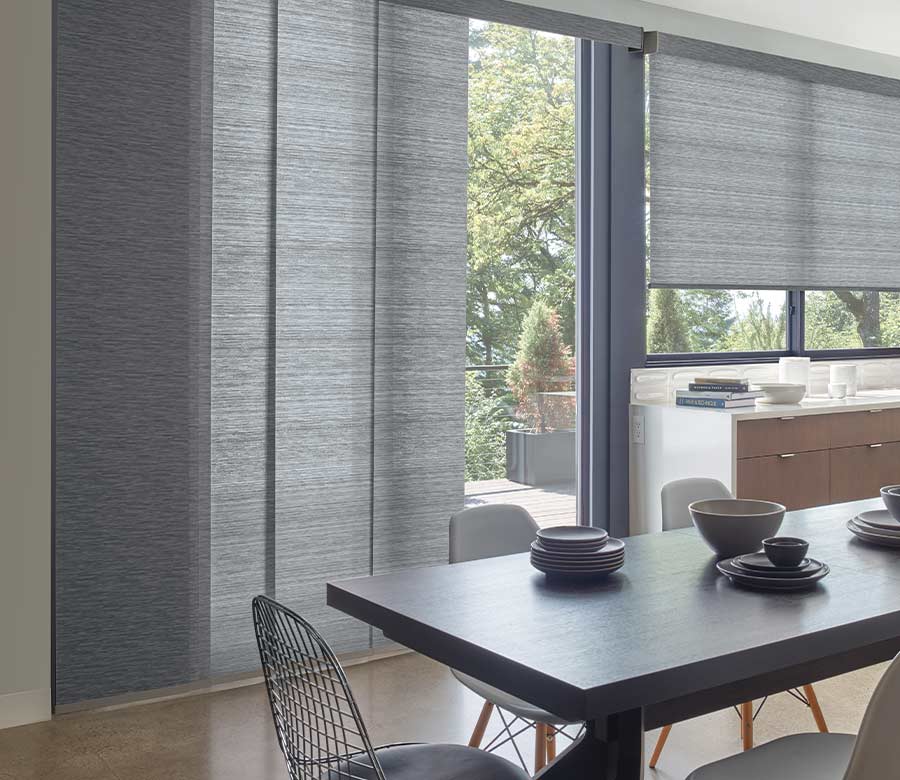
That morning sun bouncing off Cedar Creek Lake looks beautiful until it’s blinding you at 7 AM through a 12-foot sliding glass door. Your lake house in Gun Barrel City or along the Flint lakefront wasn’t built with standard windows—it was designed to showcase the water. But those expansive glass panels create challenges that homeowners in Dallas suburbs never face: relentless lake glare, humidity levels that warp cheap materials, and sliding doors so wide that most window treatments simply can’t cover them.
East Texas sits in a unique position with over 20 major lakes and thousands of premium waterfront properties that national blind companies completely overlook. The humidity hovering around 75-80% average relative humidity during summer months (Source: National Weather Service, Southern Region, 2023) destroys vinyl blinds within two seasons. The reflective glare off water increases UV exposure inside your home by up to 25% compared to non-waterfront properties (Source: U.S. Department of Energy Window Technologies Report, 2022). You need sliding door blinds in East Texas that actually understand lakefront living.
Why Standard Blinds Fail East Texas Lake Houses
Walk into any big-box store and you’ll find blinds designed for average American homes—not waterfront construction with floor-to-ceiling glass. The problems start immediately when you try fitting standard treatments to lake house architecture.
Humidity Damage on Lakefront Properties
Your Lake Tyler property or Chandler lake cabin sits in air that stays saturated from April through October. Standard faux-wood blinds contain particleboard cores that absorb moisture and warp within 18-24 months. Vinyl blinds become brittle and crack. Even aluminum mini-blinds develop oxidation spots from the constant moisture cycling between your air-conditioned interior and the humid exterior.
Waterfront homes in East Texas experience indoor humidity levels averaging 55-65% even with HVAC running (Source: Texas A&M AgriLife Extension Service, Residential Humidity Study, 2021). That’s 15-20% higher than typical inland Texas homes. Your window treatments absorb and release this moisture daily, creating expansion and contraction cycles that destroy inferior materials fast.
Oversized Glass Coverage Challenges
Lake houses along Lake Palestine and Lake Fork commonly feature sliding doors measuring 8 to 16 feet wide—sometimes wider in modern waterfront construction. Standard vertical blinds max out around 96 inches. Horizontal blinds require center supports that block your view and interfere with door operation. A-frame cabins add another layer of complexity with angular windows that standard rectangular treatments can’t address.
Reflective Glare Intensity
Water reflects approximately 10-30% of incoming sunlight depending on angle (Source: U.S. Environmental Protection Agency UV Index Report, 2023). During morning and evening hours when the sun sits low, your lakefront sliding doors become glare magnifiers. Standard sheer curtains can’t block this intensity. Dark blinds turn your living space into a cave. You need treatments that filter harsh glare while preserving your water views—the entire reason you bought lakefront property.
Best Sliding Door Blind Materials for Lake Houses
After servicing homes across Cedar Creek Lake, Lake Tyler, and the broader East Texas region, certain materials consistently outperform others in waterfront conditions.
PVC-Free Composite Materials
True composite blinds use moisture-resistant polymers without the brittleness of cheap PVC. Look for blinds rated for bathroom or pool house installation—these handle lakefront humidity without warping. Quality composites maintain their shape through humidity swings from 30% (winter with heating) to 70% (summer lakefront conditions).
Marine-Grade Aluminum Options
The same aluminum alloys used in boat components work exceptionally well for lake house blinds. Marine-grade aluminum resists the oxidation that ruins standard aluminum within 2-3 seasons near water. These cost more upfront but deliver 8-12 year lifespans in conditions that destroy lesser materials.
UV-Resistant Fabric Vertical Shades
Modern vertical shades use solution-dyed fabrics where color penetrates the entire fiber rather than coating the surface. These resist the UV fading that bleaches standard fabrics within months of lakefront sun exposure. Quality options block 85-99% of UV rays while allowing filtered natural light (Source: American Society of Heating, Refrigerating and Air-Conditioning Engineers, Window Attachment Standards, 2022).
| Material Type | Humidity Resistance | UV Blocking | Expected Lifespan (Lakefront) |
|---|---|---|---|
| Standard Vinyl | Poor | 60-70% | 1-2 years |
| Faux Wood (Particleboard Core) | Poor | 80-90% | 2-3 years |
| PVC-Free Composite | Excellent | 85-95% | 8-10 years |
| Marine-Grade Aluminum | Excellent | 70-80% | 10-12 years |
| Solution-Dyed Fabric Verticals | Good | 85-99% | 6-8 years |
Vertical Blinds vs. Panel Track Systems for Lake House Sliding Doors
Your East Texas lake house likely has at least one sliding door exceeding standard dimensions. Two systems handle these oversized openings effectively, each with distinct advantages.
Vertical Blinds: Split-Stack Configurations
Modern vertical blinds for lakefront homes can be configured to stack left, stack right, or split in the center. For wide openings common along Gun Barrel City waterfronts, center-split stacking keeps the treatment balanced and allows access from either side. Key specifications for lake house installation include:
- Vane widths of 3.5 inches for stability in ceiling fan drafts
- Weighted bottoms that prevent swaying when doors open and close
- Carrier systems rated for spans exceeding 144 inches
- Wand controls rather than chains for safety around water-wet hands
Panel Track Systems: Clean Modern Aesthetic
Panel tracks use wide fabric panels (typically 18-24 inches) that slide along a ceiling-mounted track. These suit the modern waterfront construction increasingly common on East Texas lakes. Advantages for lake houses include:
- Coverage for openings up to 192 inches without center supports
- Panels can be removed individually for cleaning or replacement
- Contemporary aesthetic matching newer A-frame and modern lakefront builds
- No vanes to catch wind when doors are open for ventilation
Panel tracks cost approximately 20-35% more than equivalent vertical blinds but deliver a higher-end appearance that complements premium Lake Fork and Lake Palestine properties.
Energy Efficiency for East Texas Lakefront Homes
Your Trinity Valley Electric or Oncor Electric bill spikes every summer—and those massive sliding doors contribute significantly. Properly selected window treatments reduce cooling costs measurably.
Solar Heat Gain Reduction
West and south-facing sliding doors on lakefront properties gain substantial solar heat during afternoon hours. Reflective-backed cellular shades can reduce solar heat gain by up to 80% (Source: U.S. Department of Energy, Energy Saver Guide, 2023). Even standard quality window treatments reduce heat gain by 33% compared to bare glass. On a 2,500 square foot lake house with 100+ square feet of sliding door glass, this translates to measurable HVAC savings.
Insulation Value in Winter
East Texas winters are mild but temperatures along Cedar Creek Lake and other bodies of water drop lower than inland areas due to moisture in the air. Cellular shades with honeycomb construction create insulating air pockets that reduce heat loss through glass by 40-50% (Source: U.S. Department of Energy, Window Treatments and Energy Efficiency Fact Sheet, 2021). Your heating system runs less frequently, and you eliminate cold drafts near glass doors.
Why East Texas Lake House Owners Trust Local Expertise: With over 15 years serving waterfront properties from Cedar Creek to Lake Fork, we’ve installed thousands of sliding door treatments in humidity conditions that destroy standard blinds. Our installers understand A-frame angles, oversized glass spans, and the specific challenges your lakefront home faces. Texas Licensed and Insured, WCRA certified, with 5-year labor warranties on all installations.
Installation Considerations for Lake House Architecture
Measuring and installing blinds in Flint lakefront properties or Chandler lake cabins requires expertise beyond standard residential work.
A-Frame and Vaulted Ceiling Mounting
Many East Texas lake houses feature A-frame construction with peaked ceilings above sliding doors. Standard brackets won’t work. Professional installation requires extension brackets, angle adapters, or ceiling-mounted tracks that follow the roofline while keeping treatments operational.
Moisture Barrier Considerations
Mounting hardware near lakefront glass doors faces humidity exposure both from indoor conditions and from condensation during temperature swings. Stainless steel mounting hardware costs marginally more but prevents the rust streaks that ruin trim work around standard steel brackets within 3-4 years.
Motorization for Hard-to-Reach Installations
When your sliding door treatments mount 10-12 feet up a vaulted ceiling, manual operation becomes impractical. Battery-powered motorization with remote control solves the access problem while eliminating cord hazards. Modern motors operate quietly and run 6-12 months on a single battery charge depending on usage frequency.
Ready to solve your lake house window challenges? Get your free lake house window treatment quote from specialists who understand East Texas waterfront living.
Frequently Asked Questions About Lake House Window Treatments
What’s the best way to clean blinds in a humid lake house environment?
Lake house blinds accumulate a combination of dust and moisture residue that creates stubborn buildup. Use a microfiber cloth dampened with a 50/50 vinegar-water solution monthly, wiping each vane or panel from top to bottom. Avoid soaking the fabric or mechanism. For vertical blinds, remove individual vanes quarterly and wash in a bathtub with mild detergent, hanging to dry completely before reinstalling.
Can I install blinds myself on oversized lake house sliding doors?
Treatments spanning over 96 inches require specialized mounting knowledge, proper header board support, and often two-person installation due to weight. DIY installation on oversized openings frequently results in sagging tracks, binding carriers, and voided warranties. Professional measurement is particularly critical because lake house framing often shifts more than standard construction due to humidity expansion cycles.
How do motorized blinds hold up to power outages common in rural East Texas?
Quality motorized blinds include manual override options—typically a hidden pull cord or removable wand that engages the mechanism directly. Battery-powered motors continue operating during outages, while hardwired systems benefit from the manual backup. Specify power-outage operation capability when ordering, as not all motorized systems include this feature standard.
Frequently Asked Questions
What’s the best way to clean blinds in a humid lake house environment?
Lake house blinds accumulate a combination of dust and moisture residue that creates stubborn buildup. Use a microfiber cloth dampened with a 50/50 vinegar-water solution monthly, wiping each vane or panel from top to bottom. Avoid soaking the fabric or mechanism. For vertical blinds, remove individual vanes quarterly and wash in a bathtub with mild detergent, hanging to dry completely before reinstalling.
Can I install blinds myself on oversized lake house sliding doors?
Treatments spanning over 96 inches require specialized mounting knowledge, proper header board support, and often two-person installation due to weight. DIY installation on oversized openings frequently results in sagging tracks, binding carriers, and voided warranties. Professional measurement is particularly critical because lake house framing often shifts more than standard construction due to humidity expansion cycles.
How do motorized blinds hold up to power outages common in rural East Texas?
Quality motorized blinds include manual override options—typically a hidden pull cord or removable wand that engages the mechanism directly. Battery-powered motors continue operating during outages, while hardwired systems benefit from the manual backup. Specify power-outage operation capability when ordering, as not all motorized systems include this feature standard.