
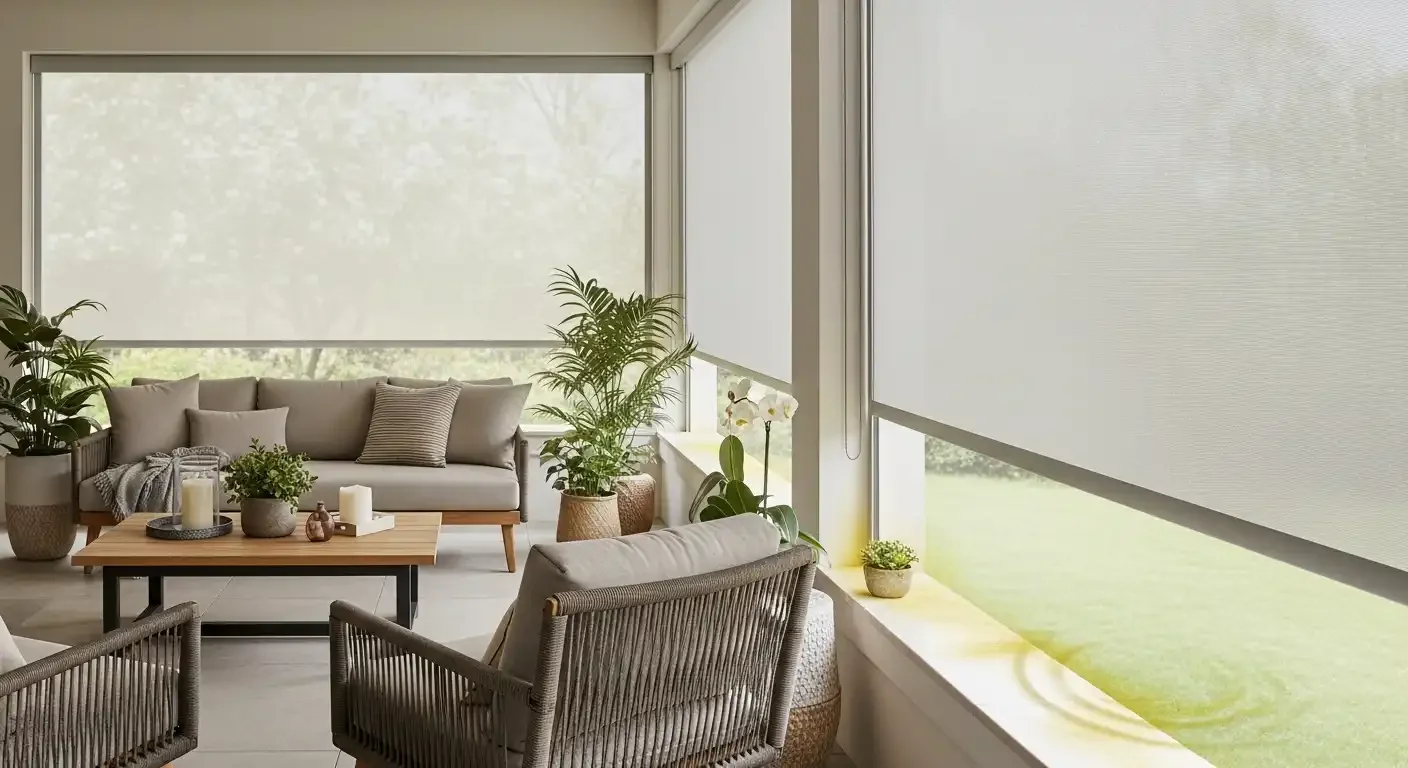
Every spring, East Texas homeowners watch helplessly as severe weather tears through their outdoor living spaces. That beautiful patio shade you installed last summer? It’s now tangled around your fence posts after a 60 mph thunderstorm gust rolled through Tyler last Tuesday. Your neighbor near Lake Fork just replaced their third set of cheap outdoor blinds in two years.
This destruction isn’t inevitable. The problem isn’t that you have a patio—it’s that most patio shade products sold in East Texas aren’t engineered for the weather patterns you actually experience here. While interior window shade solutions address wind infiltration inside your home, outdoor wind-resistant patio shades require completely different engineering standards that most suppliers ignore.
Why Standard Patio Shades Fail in East Texas Weather
East Texas sits in a unique weather corridor where Gulf moisture meets continental air masses, creating some of the most unpredictable severe weather in the state. The National Weather Service reported 47 severe thunderstorm warnings for Smith County alone between March and August 2023 (Source: National Weather Service, Shreveport Office, 2023). That’s nearly one damaging weather event every three days during your prime outdoor living season.
The Spring Severe Weather Problem
Your patio faces maximum stress during East Texas’s spring severe weather season from March through May. Standard shade fabrics rated for 25-35 mph winds encounter gusts exceeding 60 mph during typical spring storms. According to Texas Tech University’s Wind Science and Engineering Research Center, straight-line winds from East Texas thunderstorms frequently reach 70-85 mph—well beyond what discount outdoor blinds can handle (Source: Texas Tech Wind Science Center, 2022).
Lake properties around Lake Fork, Lake Palestine, and Cedar Creek Lake face amplified wind exposure. Open water creates fetch—unobstructed distance over which wind builds momentum. Your lakefront patio near Lake Fork experiences wind loads 15-25% higher than properties in downtown Longview (Source: American Society of Civil Engineers ASCE 7-22 Wind Load Standards).
Summer Thunderstorm Gusts
July and August bring a different challenge. Pop-up thunderstorms develop rapidly over East Texas, often with just 15-20 minutes warning before damaging winds arrive. Heavy duty outdoor blinds in Tyler need rapid-deployment features that let you secure your system before storms hit—not complicated cranks that take 10 minutes to operate.
“We installed wind-rated shade systems at our Lake Palestine property after losing two awning sets in consecutive summers. The new system handled that June 2024 derecho with zero damage while neighbors were picking fabric out of their trees.”
— Robert M., Lake Palestine homeowner, Oncor Electric customer since 2008
Engineering Standards for True Wind-Resistant Patio Shades
Legitimate wind resistant patio shades for East Texas conditions require specific engineering certifications that most patio suppliers never mention. Understanding these standards helps you avoid wasting money on products that won’t survive their first serious storm.
Wind Speed Ratings That Matter
The American Society of Civil Engineers establishes baseline wind resistance standards for outdoor structures. For East Texas, ASCE 7-22 designates most areas as Risk Category II with basic wind speeds of 115 mph for critical structures (Source: ASCE 7-22 Minimum Design Loads and Associated Criteria for Buildings). Your storm proof patio covers should meet at least 75% of this threshold—meaning wind ratings of 85+ mph for extended use and emergency ratings exceeding 100 mph in secured position.
| Shade Type | Typical Wind Rating | East Texas Suitability |
|---|---|---|
| Big-box store fabric shades | 25-35 mph | Inadequate—will fail in typical storms |
| Standard retractable awnings | 40-50 mph | Marginal—frequent retraction needed |
| Wind-rated outdoor blinds | 65-75 mph | Acceptable for sheltered locations |
| Engineered wind-resistant systems | 85-110 mph | Recommended for all East Texas properties |
Track and Tension Systems
Wind rated shade systems in Longview and throughout East Texas require side-channel track mounting rather than simple cable systems. Side tracks prevent fabric flutter—the primary failure mechanism during high winds. When fabric flutters, it creates cyclic stress that tears seams and pulls mounting hardware loose within minutes.
Proper tension systems maintain 18-25 pounds of force across the fabric face, eliminating the slack that allows destructive oscillation. This engineering detail separates products that survive East Texas weather from those that end up in your Oncor Electric meter area after the next storm.
Matching Wind-Resistant Solutions to East Texas Patio Styles
East Texas homes feature diverse outdoor living configurations, from open-concept patios in newer Tyler subdivisions to covered porches on established properties near the lakes. Each architectural style requires specific wind-resistant approaches.
Open-Concept Patios
Modern open-concept patios common in East Texas developments offer minimal structural wind protection. These spaces need:
- Motorized retractable systems with wind sensors that automatically secure shades when gusts exceed preset thresholds
- Reinforced corner mounting with through-bolted connections to concrete or engineered posts
- Heavy-gauge aluminum track systems rated for direct wind exposure
- Solution-dyed acrylic fabrics with ripstop reinforcement at stress points
Covered Porches and Screened Areas
Your covered porch or screened-in area near Cedar Creek Lake provides partial wind protection but creates unique pressure differentials during storms. When wind enters from one direction while other sides remain blocked, internal pressure can exceed external pressure—pushing outward on your shade system with tremendous force.
Proper installations include pressure-equalization vents and reinforced perimeter tracks that handle multi-directional loading. Properties throughout all East Texas communities benefit from site-specific wind analysis that accounts for your exact structure configuration.
Lake Property Considerations
Lake Fork and Lake Palestine properties require premium wind-resistant specifications due to increased exposure. The Insurance Institute for Business & Home Safety recommends that waterfront structures use wind-resistant materials rated at least one category above minimum code requirements (Source: IBHS FORTIFIED Home Standards, 2023). For your lake house patio, this means:
- Stainless steel hardware rather than zinc-plated alternatives that corrode in humid lakeside environments
- Marine-grade fabric treatments that resist UV degradation and mildew while maintaining strength
- Extended warranty coverage specifically addressing wind damage—most standard warranties exclude it
Installation Factors That Determine Wind Resistance
Even the best wind resistant patio shades fail when installed improperly. East Texas contractors see common mistakes that compromise wind performance regardless of product quality.
Structural Attachment Points
Your shade system is only as strong as what it’s attached to. Mounting into vinyl fascia, thin aluminum siding, or undersized posts guarantees failure. Proper East Texas installations require:
- Structural assessment of existing patio framework
- Direct attachment to load-bearing members with lag bolts or through-bolts
- Backing plates that distribute load across larger surface areas
- Professional torque specifications—over-tightening causes stress fractures
Local Code Compliance
Smith County and surrounding East Texas jurisdictions may require permits for shade structures exceeding certain dimensions. While enforcement varies, unpermitted installations can void your homeowner’s insurance coverage for wind damage—exactly when you’d need coverage most. A professional wind-resistance assessment includes permit requirement verification for your specific property.
Protecting Your Investment: Maintenance and Warranties
Proper maintenance extends the functional lifespan of your heavy duty outdoor blinds and maintains manufacturer warranty coverage. East Texas conditions demand specific maintenance protocols.
Seasonal Maintenance Schedule
Before spring severe weather season begins, inspect all mounting hardware for corrosion or loosening. Check fabric tension and side-track alignment. Clear debris from tracks and lubricate moving components with silicone-based products—petroleum lubricants attract grit that accelerates wear.
After major storms, inspect your system even if no obvious damage occurred. Invisible stress damage can weaken components, causing failure during the next wind event. Documentation of regular maintenance supports warranty claims if needed.
What Warranty Coverage Should Include
Legitimate storm proof patio covers and shade systems for East Texas should include explicit wind-damage coverage in writing. According to the Better Business Bureau, 67% of outdoor shade warranty claims involve wind damage, yet most manufacturer warranties exclude it (Source: BBB National Consumer Complaint Data, 2023). Your warranty should specify:
- Wind speed thresholds covered (minimum 75 mph for East Texas)
- Coverage for mounting hardware, not just fabric
- Labor coverage for reinstallation after covered events
- Clear procedures for filing storm-damage claims
“After researching wind ratings, we chose a system rated for 95 mph winds. When that August microburst hit our Tyler neighborhood, we were the only house on the street with intact patio shades. The peace of mind alone was worth the investment.”
— Patricia L., Tyler homeowner near Faulkner Park
Getting Started: Your Free Wind-Resistance Assessment
Every East Texas patio presents unique wind exposure challenges based on orientation, surrounding structures, and architectural configuration. Properties near Lake Fork, Lake Palestine, and Cedar Creek Lake face additional considerations that generic product specifications can’t address.
A professional wind-resistance assessment evaluates your specific situation and recommends solutions matched to your actual exposure—not oversized systems that waste money or undersized products destined for storm damage. Get your free wind-resistance assessment today and discover exactly what wind-rated shade system your East Texas patio needs to survive the next severe weather season.
Whether you’re protecting an open-concept patio in Tyler, upgrading a screened-in porch near Longview, or securing a lake house outdoor space, engineered wind-resistant solutions exist for your exact situation. Stop replacing damaged shades every year. Schedule your assessment now and invest once in a system built for East Texas weather.
Frequently Asked Questions
What wind speed rating should patio shades have for East Texas weather?
For East Texas properties, your patio shades should carry minimum wind ratings of 75-85 mph for normal operation and exceed 100 mph when fully secured. Standard big-box store products rated for 25-35 mph will fail during typical spring thunderstorms that regularly produce 60-70 mph gusts throughout the region. Lake properties near Lake Fork or Lake Palestine should consider even higher ratings due to increased wind exposure over open water.
How do wind-resistant patio shades differ from regular outdoor blinds?
Wind-resistant systems use side-channel track mounting that locks fabric edges in place, preventing the flutter that destroys standard blinds. They incorporate tension systems maintaining 18-25 pounds of constant force across the fabric face, heavy-gauge aluminum frames rather than lightweight tubing, and stainless steel hardware that resists East Texas humidity. Many include automated wind sensors that retract or secure the system before dangerous gusts arrive.
Do I need a permit to install wind-rated patio shades in East Texas?
Permit requirements vary by jurisdiction and shade system dimensions. Larger motorized systems or those attached to permanent structures may require permits in Smith County and surrounding areas. An unpermitted installation could void your homeowner’s insurance coverage for subsequent wind damage claims—a significant risk given East Texas severe weather frequency. Professional installers verify local requirements during the assessment process.
How often should I maintain wind-resistant patio shades?
Perform comprehensive inspections twice yearly—before spring severe weather season begins in March and after the peak summer thunderstorm period ends in September. Check mounting hardware for corrosion or loosening, verify fabric tension and track alignment, clear debris from channels, and apply silicone lubricant to moving components. After any storm with winds exceeding 50 mph, inspect for invisible stress damage that could cause failure during subsequent weather events.