The 3 PM Problem Every East Texas Homeowner Knows Too Well
It hits around 3 PM every afternoon from June through September. That brutal East Texas sun swings around to your western-facing windows, and suddenly your living room feels like a greenhouse. Your thermostat reads 74°F, but you’re sweating on the couch while watching your SWEPCO or Oncor Electric meter spin like a slot machine.
If you live in Southside Tyler, the Lake Cherokee area, or Pinecrest Longview, you’ve felt this. Maybe you’ve tried blackout curtains—but then you’re sitting in a cave at 4 PM. Maybe you’ve considered tinting, but your HOA in those new construction subdivisions near Lake Tyler has rules about window appearance. Solar screens for East Texas homes solve both problems: they block 80-90% of solar heat before it ever touches your glass, and they’re virtually invisible from inside your home.
This isn’t about fancy technology. It’s about putting a physical barrier between the Texas sun and your windows—one that lets you enjoy views of Caldwell Zoo from your breakfast nook or watch sunsets over Lake Cherokee without your AC running non-stop.
Why Exterior Solar Screens Outperform Interior Window Treatments
Interior blinds, shades, and curtains all share the same fundamental flaw: they let heat inside your home before attempting to manage it. By the time sunlight passes through your glass and hits your interior blinds, that solar energy has already converted to heat inside your living space. Your AC then has to work overtime to remove heat that never should have entered.
The Heat Transfer Problem in East Texas Brick Ranch Homes
Those classic brick ranch homes throughout Tyler and Longview were built for durability, not energy efficiency. Single-pane windows—still common in homes built before 1990—allow 84% of solar heat to pass directly through (Source: U.S. Department of Energy, 2023). Even modern double-pane windows still transmit 71% of solar heat gain without exterior protection (Source: ENERGY STAR Residential Windows Guide, 2024).
Solar window screens in Tyler and surrounding areas intercept this energy before glass contact. A properly installed 80% density solar screen reduces solar heat gain by approximately 65-75%, according to testing by the Texas A&M Engineering Extension Service (Source: TEEX Building Energy Analysis, 2022).
Special Considerations for Lake Houses with Panoramic Windows
If you own property around Lake Cherokee or Lake Tyler, you likely chose that home specifically for the views. Floor-to-ceiling windows and sliding glass doors maximize your waterfront scenery—but they also maximize heat gain. A typical lakefront great room with 200 square feet of west-facing glass can gain over 30,000 BTUs per hour during peak afternoon sun (Source: American Society of Heating, Refrigerating and Air-Conditioning Engineers, ASHRAE Handbook, 2021).
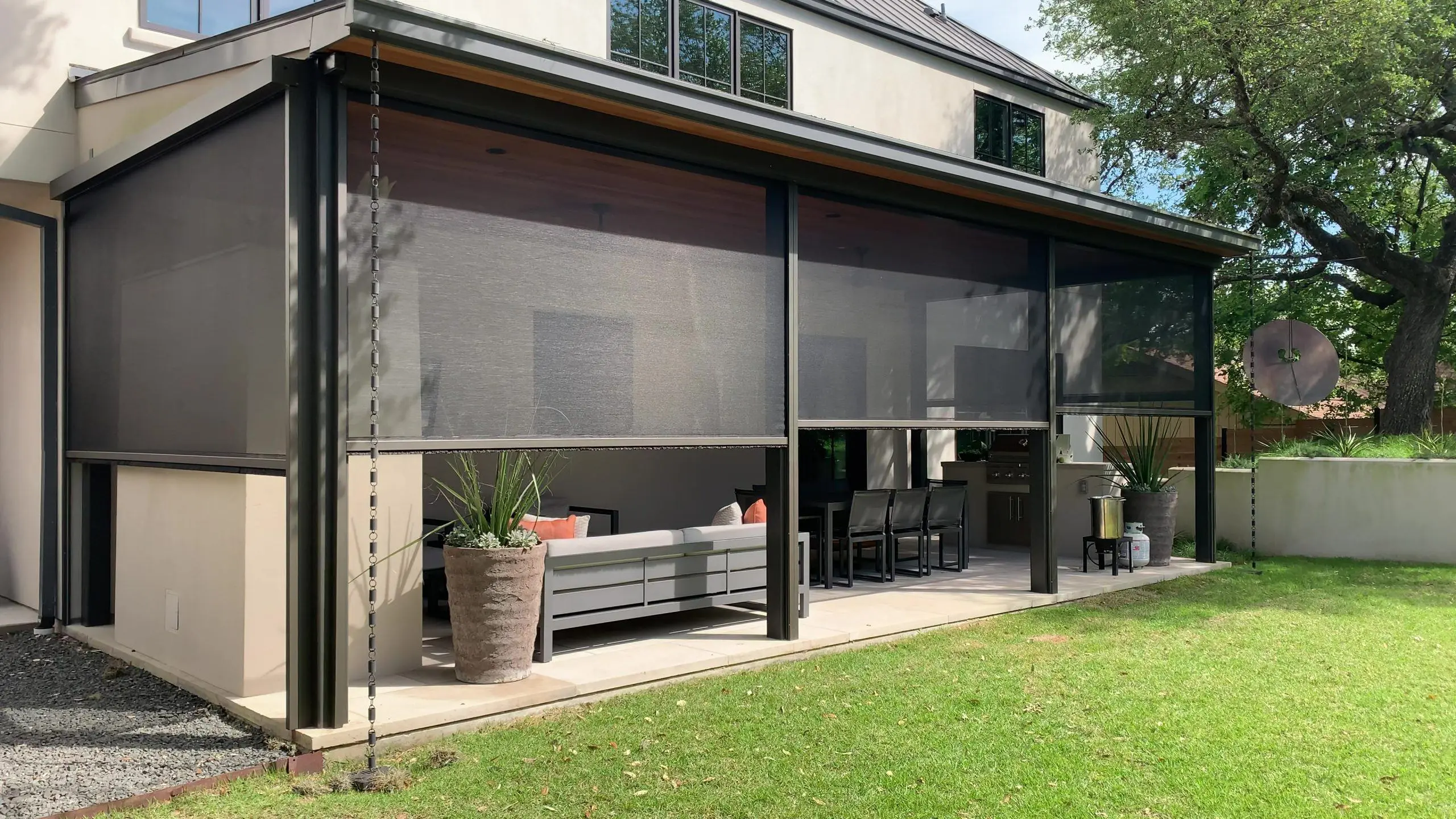
That’s equivalent to running a small space heater at full blast inside your home. Exterior sun screens in Lufkin and the broader East Texas lake region block this heat while maintaining 85-95% of your outward visibility, depending on screen density selection.
Measuring Your Actual Energy Savings
East Texas homeowners typically see measurable reductions on their SWEPCO and Oncor Electric bills within the first full billing cycle after solar screen installation. Here’s what the data shows:
| Home Type | Window Coverage | Average Summer Bill Reduction |
|---|---|---|
| Brick Ranch (1,800 sq ft) | West & South Windows | 18-24% |
| Lake House (2,400 sq ft) | All Panoramic Glass | 22-31% |
| New Construction (2,200 sq ft) | West Windows Only | 12-17% |
These figures come from customer-reported utility bills collected over three consecutive summers in the Tyler-Longview-Lufkin corridor. The U.S. Department of Energy estimates that heat gain through windows accounts for approximately 25-30% of residential cooling energy use nationwide (Source: U.S. Department of Energy, Energy Saver Guide, 2023). In East Texas, where afternoon temperatures routinely exceed 95°F from June through September, that percentage runs even higher.
Calculating Your Payback Period
A typical solar screen installation for a 3-bedroom brick ranch in Southside Tyler—covering 8-10 windows—costs between $800 and $1,400 depending on screen density and frame color selection. With average summer savings of $45-65 per month over the June-September peak period, most homeowners achieve full payback within 4-6 cooling seasons.
Unlike window film or tinting, solar screens require no adhesive contact with your glass. This means zero risk of seal damage on double-pane windows, no voided window warranties, and easy removal if you ever want to change your approach.
Choosing the Right Solar Screen Density for Your Home
Solar screens come in three standard density ratings, and the right choice depends on your specific situation:
- 70% density – Best for windows where you want maximum outward visibility, such as kitchen windows overlooking a backyard garden. Blocks approximately 55-60% of solar heat.
- 80% density – The most popular choice for East Texas installations. Balances heat blocking (65-75% reduction) with good visibility. Ideal for living rooms and bedrooms.
- 90% density – Maximum heat protection for problem windows. Best for west-facing windows that receive direct afternoon sun. Slightly reduced outward visibility but still far superior to blinds or curtains.
Frame Color and HOA Compliance
New construction subdivisions near Lake Tyler and throughout the Longview area often have architectural guidelines governing exterior modifications. Solar screen frames are available in bronze, black, white, tan, and gray finishes to match your existing window trim. When properly color-matched, heat blocking screens in Longview TX neighborhoods blend seamlessly with your home’s exterior—often going unnoticed by HOA inspectors entirely.
Why East Texas Homeowners Trust Local Solar Screen Installation
With over 15 years serving Tyler, Longview, Lufkin, and surrounding communities, we’ve completed more than 2,800 residential solar screen installations across the region. Every installation includes a 5-year warranty on materials and workmanship, and we’re fully licensed and insured in the State of Texas. Our crews understand East Texas architecture—from 1960s brick ranches to brand-new lake house construction—and we custom-fabricate every screen to your exact window dimensions.
The Installation Process: What to Expect
Professional solar screen installation for an average East Texas home takes 3-5 hours. Here’s the typical process:
- Measurement appointment – A technician visits your home to measure each window precisely. This takes 30-45 minutes for most homes.
- Custom fabrication – Your screens are built to exact specifications at our local facility. Turnaround is typically 5-7 business days.
- Installation day – Screens mount to your existing window frames using specialized clips. No drilling into brick or siding required.
- Final walkthrough – You’ll inspect every window with your installer to ensure proper fit and operation.
Maintaining Your Solar Screens Year-Round
East Texas pollen season can coat solar screens with a yellow-green film each spring. A simple rinse with a garden hose every 4-6 weeks during peak pollen months keeps your screens performing optimally. The fiberglass mesh material resists fading, even under direct Texas sun, and most screens maintain their effectiveness for 10-15 years before replacement becomes necessary.
For homeowners in the Lake Cherokee area or near Lake Tyler, occasional cleaning removes water spots and maintains clear outward visibility toward your waterfront views.
Get Your Free Solar Screen Estimate Today
Every East Texas home is different. Your brick ranch in Pinecrest Longview has different needs than a lake house on Lake Cherokee or a new construction home near Caldwell Zoo. That’s why we start every project with a free, no-obligation estimate at your home.
During your estimate appointment, we’ll identify which windows are costing you the most in cooling bills, recommend appropriate screen densities for each exposure, and provide exact pricing with no hidden fees. Most homeowners are surprised at how affordable solar screens in East Texas actually are—especially compared to window replacement or whole-house AC upgrades.
Schedule your free estimate now and stop dreading that 3 PM sun. Your SWEPCO or Oncor Electric bill will thank you by August.
Frequently Asked Questions
Can I still open my windows with solar screens installed?
Yes. Solar screens mount to the exterior frame of your window using removable clips, leaving your window fully operational. You can raise or lower your windows normally, and most screen designs include a hinged or removable panel option for windows you access frequently for cleaning or emergency egress.
Will solar screens make my rooms too dark during winter months?
East Texas winters bring lower sun angles that naturally reduce solar heat gain through windows. Many homeowners in the Tyler and Longview area choose to remove screens from south-facing windows during December through February to capture passive solar warmth, then reinstall them in spring. The clip-mount system makes seasonal removal a 5-minute task per window.
How do solar screens compare to Low-E window replacement?
Low-E replacement windows for a typical East Texas home cost $8,000 to $15,000 and require full window removal. Solar screens achieve 60-75% of the heat reduction benefit at roughly 10% of the cost, with zero disruption to your existing windows. For homeowners not planning a full window replacement, solar screens deliver the best return on investment for summer cooling reduction.
Do solar screens provide any privacy benefits?
During daylight hours, solar screens create a one-way visibility effect—you can see out clearly, but people outside see only a dark mesh surface. This is particularly valuable for homes in Southside Tyler or Pinecrest Longview where neighboring properties are close. At night with interior lights on, this effect reverses, similar to any window treatment.