Your Cedar Creek Lake cabin’s morning view should take your breath away—not the mold creeping behind your window treatments. East Texas lake house owners face a window treatment challenge that inland homeowners never encounter: relentless humidity that warps fabric, breeds mildew, and destroys standard roman shades within two seasons.
With over 100 lakes across the East Texas region—from Toledo Bend Reservoir to Lake Palestine—thousands of waterfront property owners discover too late that the gorgeous linen roman shades they installed start smelling musty by their second summer. This guide delivers the moisture-resistant solutions your lakefront home actually needs, not the generic advice designed for climate-controlled suburban living rooms.
Why Standard Roman Shades Fail at East Texas Lake Properties
The combination of East Texas humidity (averaging 73% relative humidity year-round according to the National Weather Service) and lakefront proximity creates a perfect storm for window treatment failure. When you open your Lake Tyler Hideaway cabin after a two-week absence, that trapped moisture has been working against your window coverings every single day.
The Hidden Damage Timeline
Month 1-3: Standard cotton or linen roman shades absorb moisture from the lake air. You might notice slight waviness in the fabric.
Month 4-6: The wooden dowels inside traditional roman shades begin warping. Your shades no longer raise evenly—one side hangs lower than the other.
Month 7-12: Mold spores colonize the organic fibers. That musty smell isn’t your imagination. According to the Environmental Protection Agency, mold growth occurs on any surface when relative humidity exceeds 60% for extended periods (Source: EPA Indoor Air Quality Guide, 2023).
Lake-Specific Moisture Challenges
Properties near Lake Fork Marina and Caddo Lake State Park face even more aggressive humidity patterns due to the surrounding cypress forests that trap moisture. Your A-frame cathedral ceiling windows—while architecturally stunning—create convection patterns that pull humid air directly against your window treatments.
“After 23 years installing window treatments across Cherokee County, I’ve seen standard roman shades fail at lake houses within 18 months while the same products last 8-10 years at inland properties. The difference is dramatic and completely predictable.”
Moisture-Resistant Roman Shade Materials That Actually Work
Not all roman shades are created equal—especially when your home overlooks Cedar Creek Lake in Gun Barrel City or sits along the shores of Lake Palestine near Flint. Here’s what survives East Texas lakefront conditions:
Synthetic Performance Fabrics
Solution-dyed polyester resists moisture absorption because the color is embedded during fiber creation, not applied afterward. This matters because surface dyes break down when exposed to humidity, causing fading and fabric deterioration. According to the American Association of Textile Chemists and Colorists, solution-dyed fabrics retain 95% of their color integrity after 500 hours of humidity exposure compared to 60% for conventional dyed fabrics (Source: AATCC Technical Manual, 2022).
Vinyl-coated polyester creates a complete moisture barrier. While this sacrifices some of the soft, natural aesthetic, it’s the most practical choice for bathrooms and kitchens in your lakefront property where steam compounds the ambient humidity.
Treated Natural Fibers
If you prefer the look of natural materials, antimicrobial-treated bamboo and moisture-sealed cotton blends offer middle-ground solutions. However, understand that “moisture-resistant” isn’t “moisture-proof”—these treatments extend lifespan by 40-60% compared to untreated natural fibers but won’t match synthetic longevity.
| Material | Humidity Resistance | Estimated Lifespan (Lake House) | Price Range |
|---|---|---|---|
| Untreated Cotton/Linen | Poor | 12-18 months | $150-250 |
| Treated Natural Fibers | Moderate | 3-4 years | $200-350 |
| Solution-Dyed Polyester | Excellent | 7-10 years | $250-400 |
| Vinyl-Coated Polyester | Superior | 10-15 years | $300-500 |
Hardware and Installation Considerations for Lakefront Homes
The fabric is only half the equation. Your waterfront window treatments at Cedar Creek Lake or Lake Tyler will fail just as quickly if the mounting hardware can’t handle the environment.
Corrosion-Resistant Mounting Systems
Standard aluminum brackets develop oxidation spots within months at lakefront properties. Specify stainless steel or powder-coated aluminum hardware for all installations. The National Association of Home Builders reports that untreated metal hardware in high-humidity environments shows visible corrosion 3x faster than in controlled indoor settings (Source: NAHB Remodeling Industry Report, 2023).
Cathedral Ceiling Installations
Those dramatic A-frame windows overlooking Toledo Bend Reservoir require specialized mounting solutions. Motorized roman shades with battery operation eliminate the need for hardwiring in difficult-to-access installations. Trinity Valley Electric Cooperative members should note that battery-operated shades avoid the permit requirements sometimes triggered by adding new electrical circuits.
Proper Ventilation Planning
Your roman shades need breathing room. Installing shades with a 1-inch gap from the window frame allows air circulation that prevents moisture accumulation. This is particularly critical for homes in low-lying areas near Lake Palestine Flint where morning fog rolls directly off the water.
- Inside-mount installations: Ensure 1/2″ clearance on each side
- Outside-mount installations: Extend 2″ beyond frame on each side for airflow
- Layered treatments: Avoid trapping moisture between sheers and roman shades
Selecting Patterns and Colors for Your East Texas Lake House
Moisture resistance shouldn’t mean sacrificing style. Your lakefront cabin or modern lake house deserves window treatments that complement both the architecture and the views.
Light-Filtering vs. Blackout Options
East Texas summers bring intense afternoon sun across the lakes, with UV indices regularly exceeding 10 from May through September (Source: National Weather Service Tyler Office, 2024). Light-filtering roman shades in living areas preserve your view while reducing UV damage to furniture. Blackout options work better for bedrooms where morning sun reflecting off the water can wake you at 5:30 AM.
Color Considerations for Humid Environments
Darker colors show water spots and mineral deposits more readily than lighter tones. For properties near Cedar Creek Lake Gun Barrel City where the water has higher mineral content, consider medium-tone neutrals that camouflage any spotting between cleanings.
- Soft grays and taupes hide water marks effectively
- Navy and hunter green complement the natural lake surroundings
- White and cream require more frequent cleaning but brighten cabin interiors
- Textured fabrics disguise imperfections better than smooth surfaces
Coordinating with Lakefront Architecture
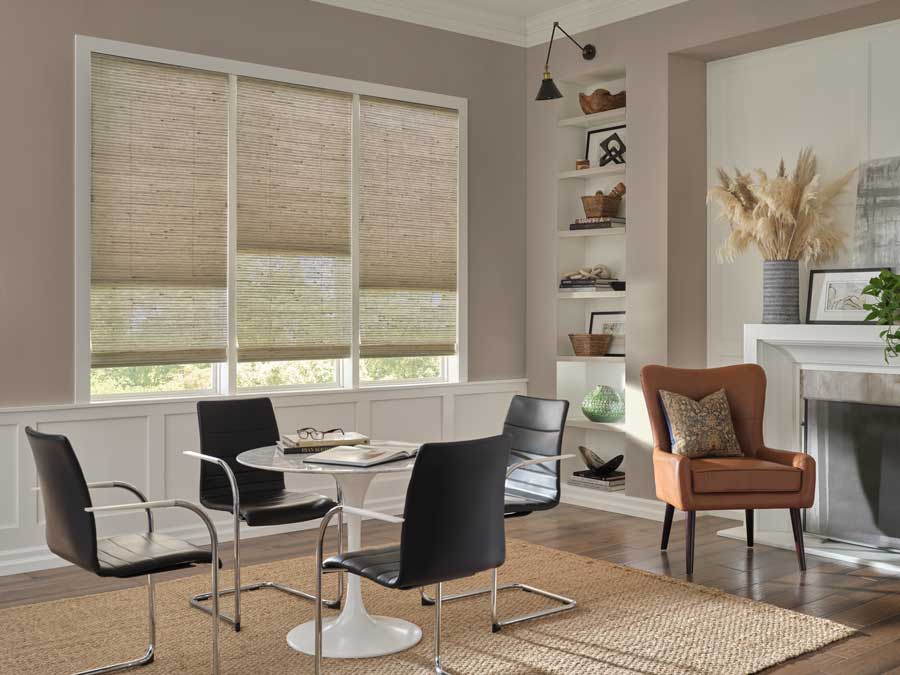
Modern lake houses with expansive windows benefit from clean-lined flat-fold roman shades that don’t compete with the view. Traditional cabin aesthetics pair well with hobbled or relaxed roman shade styles that add softness without looking overly formal. The key is matching your window treatments to your home’s character—not installing generic solutions that ignore your property’s unique personality.
Maintenance Routines That Extend Lifespan
Even moisture-resistant roman shades require specific care in East Texas lakefront environments. Cherokee County Electric customers running dehumidifiers should maintain indoor humidity between 45-55% year-round—high enough to prevent wood cracking but low enough to discourage mold growth.
Seasonal Care Calendar
Spring (March-April): Inspect all shades for winter moisture damage before peak humidity season arrives. Check mounting hardware for early corrosion signs.
Summer (May-August): Clean shades monthly with a damp microfiber cloth to remove pollen and dust that holds moisture against fabric.
Fall (September-November): Deep clean all window treatments before closing the lake house for winter. Ensure shades are completely dry before lowering for storage position.
Winter (December-February): If leaving your lake property unoccupied, raise all shades fully to maximize air circulation around window frames.
When to Replace vs. Repair
According to the Window Covering Manufacturers Association, roman shades should be replaced when fabric shows visible mold that doesn’t respond to cleaning, when lifting mechanisms fail repeatedly, or when warping prevents smooth operation (Source: WCMA Consumer Care Guide, 2023). Attempting to repair severely moisture-damaged shades typically costs 60-70% of replacement while delivering inferior results.
Ready to protect your East Texas lake house investment with window treatments that actually survive lakefront humidity? Schedule your free lakefront property window consultation and get expert recommendations specific to your lake, your home’s architecture, and your budget.
Frequently Asked Questions
How much should I budget for moisture-resistant roman shades at my lake house?
For a typical East Texas lake house with 8-12 windows, expect to invest $2,500-$4,500 for quality moisture-resistant roman shades including professional installation. This represents a 30-40% premium over standard roman shades, but the extended lifespan (7-10 years versus 12-18 months) delivers significantly better long-term value. Properties with cathedral ceilings or custom-shaped windows near Caddo Lake State Park or Lake Fork Marina may require additional engineering for safe, attractive installations.
Can I install motorized roman shades without rewiring my older lake cabin?
Yes—battery-powered motorized roman shades eliminate wiring requirements entirely. Modern lithium-ion battery packs last 12-18 months between charges for typical daily use. Solar-powered options that recharge using window light work exceptionally well for south-facing windows at properties overlooking Toledo Bend Reservoir where sun exposure is abundant. This avoids electrical permit requirements that Trinity Valley Electric Cooperative or Cherokee County Electric service areas might otherwise require.
What warranty coverage should I expect for lakefront window treatments?
Reputable manufacturers offer 5-7 year warranties on moisture-resistant roman shade fabrics and lifetime warranties on hardware when properly specified for high-humidity environments. However, warranties typically require documentation that shades were professionally installed and maintained according to manufacturer specifications. DIY installations at Lake Tyler Hideaway or Cedar Creek Lake Gun Barrel City properties may void coverage, making professional installation worth the additional investment.
Don’t let another humid East Texas summer destroy your window treatments. Book your lakefront property window consultation today and discover roman shades built specifically for life on the water.
Frequently Asked Questions
How much should I budget for moisture-resistant roman shades at my lake house?
For a typical East Texas lake house with 8-12 windows, expect to invest $2,500-$4,500 for quality moisture-resistant roman shades including professional installation. This represents a 30-40% premium over standard options, but the extended 7-10 year lifespan delivers significantly better long-term value than standard shades lasting only 12-18 months.
Can I install motorized roman shades without rewiring my older lake cabin?
Yes—battery-powered motorized roman shades eliminate wiring requirements entirely. Modern lithium-ion battery packs last 12-18 months between charges, and solar-powered options work exceptionally well for south-facing lakefront windows with abundant sun exposure.
What warranty coverage should I expect for lakefront window treatments?
Reputable manufacturers offer 5-7 year warranties on moisture-resistant fabrics and lifetime warranties on hardware when properly specified for high-humidity environments. Professional installation documentation is typically required to maintain warranty coverage.